The effect of cognitive models of strategic flexibility on sustainable strategic performance
DOI:
https://doi.org/10.71207/ijas.v19i77.1794Keywords:
Cognitive models of strategic flexibility, sustainable strategic performanceAbstract
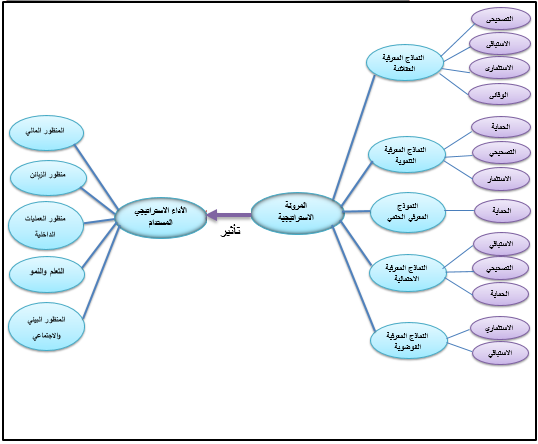
The study aimed to test the effect of cognitive models of strategic resilience on sustainable strategic performance. The Al-Furat State Company for Chemical Industries and Pesticides in Babil Governorate was selected as the field for this study. Data was collected through a questionnaire. The study sample included (115) decision-makers in the company. The data was analyzed by benefiting from the statistical program (SPSS, V.23), and a set of statistical methods were used to process the data, including (descriptive statistics, correlation coefficients, and gradient multiple regression analysis). The study reached a number of results, the most important of which are: the adoption of rational corrective measures by the company's leaders (reaction) in the field of responding to environmental changes rather than being rationally proactive.
Downloads
References
العربية
الخزاعي , علي صكر جابر ( 2009 ) " القدرة على اتخاذ القرار على وفق كفاءة التمثيل المعرفي للمعلومات لدى طلبة الجامعة " كلية التربية _ جامعة القادسية , مجلة القادسية للعلوم الانسانية , المجلد الثاني عشر _ العدد 4 .
الزيادي , سحر عباس حسين (2019) الدور الوسيط للمرونة الاستراتيجية في العلاقة بين ممارسات إدارة الجودة الشاملة والأداء التنظيمي المستدام , أطروحة إلى مجلس كلية الإدارة و الاقتصاد / جامعة كربلاء.
الشمري , انتظار احمد جاسم (2005) "إدارة المعرفة ودورها في تعزيز عملية اتخاذ القرار الاستراتيجي , مجلة كلية بغداد للعلوم الاقتصادية _ العدد الحادي عشر .
عبد الحافظ ,مؤمن طه عبد النعيم(2020)"تطبيق بطاقة الأداء المتوازن لتقييم الأداء الاستراتيجي بحمامات السباحة" المجلة العلمية للتربية البدنية وعلوم الرياضة_العدد 88_ الجزء 5 .
عبد, ضرغام حسن , و الجنابي , اميرة هاتف , و حبش , خير الدين محمد علي (2017) "اثر ادارة الموهبة في تحقيق النجاح الاستراتيجي بتوسيط الاداء التنظيمي المستدام"م. مجلة العلوم الادارية العراقية_ مجلد 1 العدد 3 .
المسعودي , حيدر علي , و السيد علي , هبة الله مصطفى ( 2016 ) " استعمال بطاقة الأداء المتوازن المستدامة لتقويم الأداء الستراتيجي المستدام , مجلة الإدارة والاقتصاد – السنة التاسعة والثلاثون –العدد 109 .
المسعودي , حيدر علي جراد , و المسعودي , هبة نبيل حميد ( 2018 ) " قياس الأداء الاستراتيجي المتوازن المستدام للشركات الصناعية " مجلة الإدارة و الاقتصاد _المجلد 7 _ العدد 25 .
المسعودي , هبة نبيل حميد منصور ( 2017 ) توظيف TBL و SBSC لتقويم الأداء الستراتيجي المتوازن المستدام , رسالة ماجستير _كلية الإدارة و الاقتصاد _جامعة كربلاء .
المغربي , عبد الحميد عبد الفتاح , الإدارة الاستراتيجية بقياس الأداء المتوازن , 2006 , المكتبة العصرية , المنصورة .
دشلي, كمال (2016)" منهجية البحث العلمي " مديرية الكتب والمطبوعات الجامعية, جامعة حماة
نوري , مظفر محمد ( 2013 ) دور إدارة المعرفة في اتخاذ القرار , دراسة حالة لعينة من مديري منظمات الاعمال في محافظة دهوك , مجلة جامعة كركوك للعلوم الإدارية و الاقتصادية .
الاجنبية
Abbott, A., & Banerji, K. (2003). Strategic flexibility and firm performance: the case of US based transnational corporations. Global Journal of Flexible Systems Management, 4(1/2), 1-7.
Almansoori, M. R. M. O. (2021). The Mediating Role of Sustainability between Strategic Planning and the Performance of Governmental Organizations. Int. J. Contemp. Manag. Inf. Technol, 1(2), 28-34.
Almansoori, M. R. M. O. (2021). The Mediating Role of Sustainability between Strategic Planning and the Performance of Governmental Organizations. Int. J. Contemp. Manag. Inf. Technol, 1(2), 28-34.
Beck, A. T., & Haigh, E. A. (2014). Advances in cognitive theory and therapy: The generic cognitive model. Annual review of clinical psychology, 10(1), 1-24.
Bendall, R. C., Galpin, A., Marrow, L. P., & Cassidy, S. (2016). Cognitive style: Time to experiment. Frontiers in psychology, 7, 1786.
Bourgeois, L. J. III (1984) Strategic Management and Determinism, Academy of Management Review, 9 4, pp.586-596
Brozovic, D. (2018). Strategic flexibility: A review of the literature . International Journal of Management Reviews, 20(1), 3-31.
Combe, I. A., & Greenley, G. E. (2004). Capabilities for strategic flexibility: a cognitive content framework. European Journal of Marketing.
Earl, M. (2001). Knowledge management strategies: Toward a taxonomy. Journal of management information systems, 18(1), 215-233.
Eggers, J. P., & Kaplan, S. (2013). Cognition and capabilities: A multi-level perspective. Academy of Management Annals, 7(1), 295-340.
Ernult, J., & Ashta, A. (2008). HOW TO MEASURE GLOBAL SUSTAINABLE PERFORMANCE IN A SERVICE ENTERPRISE? A CASE STUDY OF THE CREDIBILITY OF VIGEO'S RATING OF CAISSE D'EPARGNE. Journal of services research, 8.
Field, A., (2009).” Discovering statistics using SPSS”, 3rd edition. London: Sage.
Figge, F., Hahn, T., Schaltegger, S., & Wagner, M. (2002). The sustainability balanced scorecard–linking sustainability management to business strategy. Business strategy and the Environment, 11(5), 269-284.
Firat, A. F., Dholakia, N. and Venkatesh, A. (1995) Marketing in a Postmodern World, European Journal of Marketing, 29, 1, pp.40-56.
Harmon, J., Fairfield, K. D., & Behson, S. (2009, June). A comparative analysis of organizational sustainability strategy: Antecedents and performance outcomes perceived by US and Non-US based managers. In Proceedings of the International Eastern Academy of Management Conference, Rio de Janeiro, Brazil (pp. 21-25).
Horngren, C., Harrison, W., Oliver, S., Best, P., Fraser, D., & Tan, R. (2012). Financial accounting. Pearson Higher Education AU.
Jassem, S., Zakaria, Z., & Azmi, A. C. (2021). Sustainability balanced scorecard architecture and environmental performance outcomes: a systematic review. International Journal of Productivity and Performance Management.
Kaplan, R. S., & Norton, D. P. (2005). The balanced scorecard: measures that drive performance. Harvard business review, 83(7), 172
Lindblom, C. E. (1959) The Science of Muddling Through, Public Administration Review, 19, pp.79-88.
Lumpkin, G. T., & Dess, G. G. (1996). Clarifying the entrepreneurial orientation construct and linking it to performance. Academy of management Review, 21(1), 135-172.
McGinty, R. (2004). Measuring Business Performance: Emerging Perspectives Of The Balanced Scorecard. Journal of Business & Economics Research (JBER), 2(5).
Miller, K. D., & Bromiley, P. (1990). Strategic risk and corporate performance: An analysis of alternative risk measures. Academy of Management journal, 33(4), 756-779.
Mintzberg, H. (1973) Strategy-Making in Three Modes, Californian Management Review, XV1, 2, pp.49-53.
Nutt, P. C. (1993) Flexible Decision Styles and the Choice of Top Executives, Journal of Management Studies, 30, 5, pp.695-721.
Petrini, M., & Pozzebon, M. (2009). Managing sustainability with the support of business intelligence: Integrating socio-environmental indicators and organisational context. The Journal of Strategic Information Systems, 18(4), 178-191.
Sanchez, R. (1997). Preparing for an uncertain future: Managing organizations for strategic flexibility. International studies of management & organization, 27(2), 71-94.
Senge, P. M. (1990) The Fifth Discipline: The Art and Practice of the Learning Organization. Century Business.
Sharfman, M. P. and Dean, J. W. Jr. (1997) Flexibility in Strategic Decision-making: Informational and Ideological Perspectives, Journal of Management Studies, 34, 2, pp.191-217.
Stacey, R. D. (1995) The Science of Complexity: An Alternative Perspective for Strategic Change Processes, Strategic Management Journal, 6, pp.477-495.
Stubbs, W., & Cocklin, C. (2008). Conceptualizing a “sustainability business model”. Organization & environment, 21(2), 103-127.
T., Varadarajan, P.R. and Pride, W.M. (1994), Environmental management: the construct and research propositions, Journal of Business Research, 29, 23-38
Venkatraman, N. (1989). The concept of fit in strategy research: Toward verbal and statistical correspondence. Academy of management review, 14(3), 423-444.
Downloads
Published
How to Cite
Issue
Section
License
Copyright (c) 2024 زينب ثائر توفيق الحربي ، ا. د أحمد كاظم بريس

This work is licensed under a Creative Commons Attribution-NonCommercial-NoDerivatives 4.0 International License.
Authors retain the copyright of their papers without restrictions.