الدور الوسيط للذكاء التسويقي في العلاقة بين الفراسة الاستراتيجية وتقديم الخدمات الإلكترونية
DOI:
https://doi.org/10.71207/ijas.v22i87.5721الكلمات المفتاحية:
الفراسة الاستراتيجية، الذكاء التسويقي، الخدمات الإلكترونية.الملخص
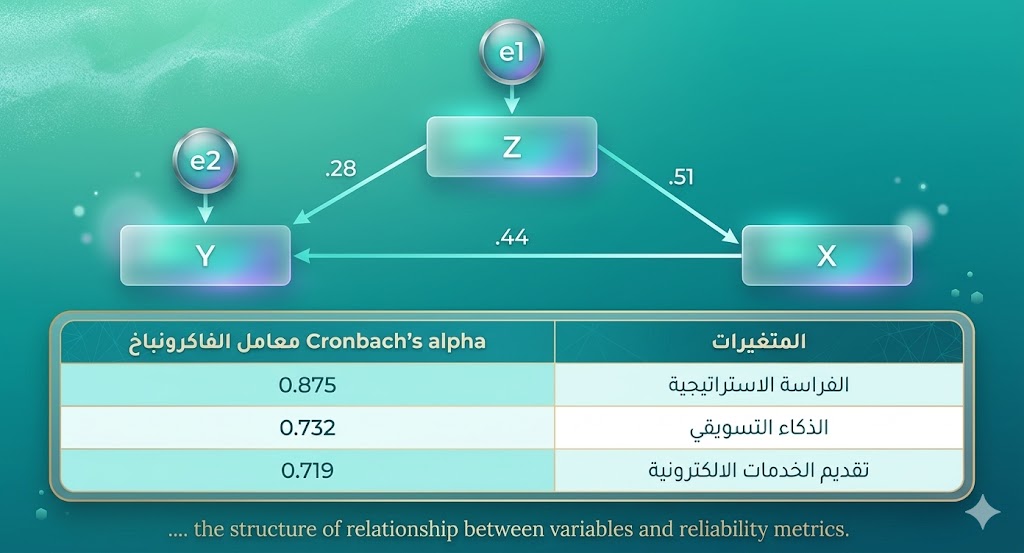
تهدف هذه الدراسة إلى استكشاف الدور الوسيط للذكاء التسويقي في تعزيز العلاقة بين الفراسة الاستراتيجية للقطاع السياحي، بأبعادها المختلفة، وتقديم الخدمات الإلكترونية. وتركز الدراسة على تقييم أساليب جمع البيانات وتحليلها لتحديد التحديات والفرص في قطاع السياحة العراقي. اعتمدت الدراسة على المسح البيئي لجمع البيانات حول المشكلات التي تواجه قطاع السياحة في العراق وتحليلها لتحديد الاتجاهات المستقبلية. استُخدمت تقنيات وبرامج متقدمة لجمع المعلومات وتحليلها بما يتماشى مع أهداف الدراسة ومشكلتها وأسئلتها. استُخدم الاستبيان كوسيلة للحصول على المعلومات من عينة مكونة من 162 فردًا من شركات السياحة العراقية. تم تحليل البيانات باستخدام برامج إحصائية (Amos الإصدار 23) و(SPSS الإصدار 26). وخلصت الدراسة إلى وجود تأثير مباشر وغير مباشر للفراسة الاستراتيجية من خلال تبني الذكاء التسويقي. كذلك فقد توصلت الدراسة إلى مجموعة من التوصيات، أهمها ضرورة استخدام الشركات لأدوات تحليل متقدمة لجمع وتحليل بيانات الأسواق والعملاء والمنافسين بشكل دوري، وتدريب الموظفين على استخدامها والاستفادة منها في اتخاذ القرارات الاستراتيجية.الكلمات المفتاحية: الفراسة الاستراتيجية، الذكاء التسويقي، الخدمات الإلكترونية.
التنزيلات
المراجع
1. Agrawal, E. (2023). Going Viral: An Analysis of Advertising of Technology Products on TikTok. arXiv preprint arXiv:2402.00010.
2. Agwu, M. E. (2021). Can technology bridge the gap between rural development and financial inclusions?. Technology Analysis & Strategic Management,33(2), 123-133.
3. Arokodare, M. A., & Asikhia, O. U. (2020). Strategic agility: Achieving superior organizational performance through Strategic Physiognomy. Global Journal of Management and Business Research, 20(3), 7-16.
4. Buehring, J., & Bishop, P. C. (2020). Foresight and design: New support for strategic decision making. She Ji: The Journal of Design, Economics, and Innovation, 6(3), 408-432.
5. Burt, G., & Nair, A. K. (2020). Rigidities of imagination in scenario planning: Strategic Physiognomy through ‘Unlearning’. Technological Forecasting and Social Change, 153, 119927 .
6. Chaimaa, B., Najib, E., & Rachid, H. (2021). E-banking overview: concepts, challenges and solutions. Wireless Personal Communications, 117, 1059-1078.
7. Ebrahimi, P., Basirat, M., Yousefi, A., Nekmahmud, M., Gholampour, A., & Fekete-Farkas, M. (2022). Social networks marketing and consumer purchase behavior: the combination of SEM and unsupervised machine learning approaches. Big Data and Cognitive Computing, 6(2), 35.
8. Édes, B. (2021). Learning from Tomorrow: Using Strategic Physiognomy to prepare for the next big disruption. John Hunt Publishing.
9. Falade, P. V., & Ogundele, G. B. (2023). Vulnerability analysis of digital banks' mobile applications. arXiv preprint arXiv:2302.07586.
10. Fergnani, A. (2022). Corporate foresight: A new frontier for strategy and management. Academy of Management Perspectives, 36(2), 820-844.
11. Fiberesima, R. (2023). Assessment of POS Owners Awareness of Cybersecurity and Insider Threats in POS Kiosks Related Financial Crimes. arXiv preprint arXiv:2308.04447.
12. Flaih, L. H., & Chalab, I. D. (2022). Strategic Physiognomy And Its Impact On Strategic Agility: An Analytical Study Of The Opinions Of A Sample Of University Leaders In Private Universities In The Middle Euphrates Region. Journal of Positive School Psychology, 3154-3167.
13. Gordon, A. V., Ramic, M., Rohrbeck, R., & Spaniol, M. J. (2020). 50 Years of corporate and organizational foresight: Looking back and going forward. Technological Forecasting and Social Change, 154, 119966.
14. Haarhaus, T., & Liening, A. (2020). Building dynamic capabilities to cope with environmental uncertainty: The role of Strategic Physiognomy. Technological Forecasting and Social Change, 155, 120033.
15. Hamel, S., Ims, R. A., & Yoccoz, N. G. (2022). Challenges and opportunities when implementing Strategic Physiognomy: lessons learned when engaging stakeholders in climate-ecological research. Climate Research, 86, 29-35.
16. Haralayya, B. (2021). How Digital Banking has brought innovative products and services to India. Journal of Advanced Research in Quality Control and Management, 6(1), 16-18.
17. Lari, F. A., Lari, D. A. D. A., & Lari, M. A. D. A. (2020). Empirical Differences between UAE and Finland of Strategic Physiognomy Implementation. International Journal of Sustainable Construction Engineering and Technology, 11(2), 175-180.
18. Manu, A. (2022). Strategic Physiognomy and the Narrative of Disruption. In The Philosophy of Disruption (pp. 93-107). Emerald Publishing Limited.
19. Moqaddamerad, S., & Ali, M. (2024). Strategic Physiognomy and business model innovation: The sequential mediating role of sensemaking and learning. Technological Forecasting and Social Change, 200, 123095.
20. Nascimento, L. D. S., Reichert, F. M., Janissek-Muniz, R., & Zawislak, P. A. (2021). Dynamic interactions among knowledge management, Strategic Physiognomy and emerging technologies. Journal of Knowledge Management, 25(2), 275-297.
21. Nathiya, T., & Janaki Priya, K. (2023). Analysis of Electronic Banking and Information Technology using the TOPSIS Method. REST Journal on Banking, Accounting and Business.
22. Nazaritehrani, A., & Mashali, B. (2020). Development of E-banking channels and market share in developing countries. Financial Innovation, 6(1), 12.
23. Panjaitan, W. J., Sholihah, E., Koerniawan, I., & Andriana, M. (2022). Maintaining Organizational Sustaincapability Towards Management Innovation Using Strategic Physiognomy. Journal of Management and Informatics, 1(1), 01-10.
24. Piriyakul, I., & Piriyakul, R. (2022). The moderating effect of influencer on the causal map of mutual information, coproducer and customer value: A thematic analysis of messages posted by brand communities. Journal of Marketing Analytics, 10(2), 131.
25. Poleshchuk, R. (2022). Increasing Bank Customers’ Loyalty through Innovative Loyalty Programs.
26. Pulsiri, N., & Vatananan-Thesenvitz, R. (2021). Triangle relationship: A Review of dynamic capabilities, Strategic Physiognomy, and organizational learning. International Journal of Business Environment, 5(3), 1-18.
27. Rangaswamy, E., & Kumar Sagadevan, S. (2021). Manipulation tactics and consumer behaviour: Creating a desire to purchase. *Journal of Tianjin University Science and Technology, 54*(10), 1-22.
28. Rawwash, H., Masad, F., Enaizan, O., Eneizan, B., Adaileh, M., Saleh, A., & Almestarihi, R. (2020). Factors affecting Jordanian electronic banking services. Management Science Letters, 10(4), 915-922.
29. Sjöholm, R. (2021). Maintaining competence in the changing world: How to improve foresight capabilities in the case company?.
30. Urdea, A. M., Constantin, C. P., & Purcaru, I. M. (2021). Implementing experiential marketing in the digital age for a more sustainable customer relationship. Sustainability, 13(4), 1865.
31. Vinoth, S., Vemula, H. L., Haralayya, B., Mamgain, P., Hasan, M. F., & Naved, M. (2022). Application of cloud computing in banking and e-commerce and related security threats. Materials Today: Proceedings, 51, 2172-2175.
32. Zand, S. K. (2020). Towards intelligent risk-based customer segmentation in banking. arXiv preprint arXiv:2009.1392
التنزيلات
منشور
كيفية الاقتباس
إصدار
القسم
الرخصة
الحقوق الفكرية (c) 2026 محمد عوض جارالله، امجد حميد اسماعيل، احمد صبيح لفته، احمد عبد الله امانة

هذا العمل مرخص بموجب Creative Commons Attribution-NonCommercial-NoDerivatives 4.0 International License.
يحتفظ المؤلفون بحقوق الطبع والنشر لأوراقهم دون قيود.